How Korean beauty brands actually enter the US.
The US is now Korea's largest cosmetics export market. The brands winning it did not start with retail.
Eliot Intelligence · 11 min 읽기
Korean cosmetics exports hit a record $11.4 billion in 2025, and for the first time the United States was the number one destination. Here is the sequence that works, and the one that quietly wastes a year.
For most of the last decade, a Korean beauty brand planning international expansion planned for China. That assumption is now out of date. In 2025 Korean cosmetics exports reached a record $11.43 billion, up 12.3 percent year over year, and the United States became the single largest destination at roughly $2.2 billion, rising 15 percent. Exports to China fell 19 percent over the same period. The two markets swapped places.
$2.2B
Korean cosmetics exported to the US in 2025
That reversal changes what a US launch has to look like. A brand entering America today is not introducing an unfamiliar category. K-beauty is already established: US K-beauty sales reached $2.8 billion with household penetration at 28.7 percent. The category question is settled. What is contested now is shelf space and feed space, and those are won in a specific order.
The sequence that works
The most common expensive mistake we see is sequencing retail first. A brand signs a US retail partnership, allocates most of the launch budget to trade terms and in-store, then treats creator marketing as a support line item three weeks before doors open. Sell-through underperforms, the retailer reduces the order, and the brand concludes that America is difficult.
The brands that break through invert that. Demand is manufactured in the feed first, then converted into a retail conversation. A buyer at a major US retailer is far easier to persuade with existing US search volume, creator content velocity, and social commerce sales data than with a deck about performance in Seoul.
- Phase 1, months 0 to 3: contracted seeding at volume. Put product with a wide base of US creators on agreed deliverables, so you learn how the product demos in English and come out with a content library and creator feedback rather than a hoped-for post rate.
- Phase 2, months 2 to 6: paid creator campaigns. Take the organic winners from phase 1 and put budget behind the formats that already proved out, rather than guessing at creative.
- Phase 3, months 4 to 9: social commerce. Convert content velocity into trackable revenue, which becomes the retail pitch.
- Phase 4, months 6 to 12: retail conversation, now backed by US-specific demand data rather than Korean performance.
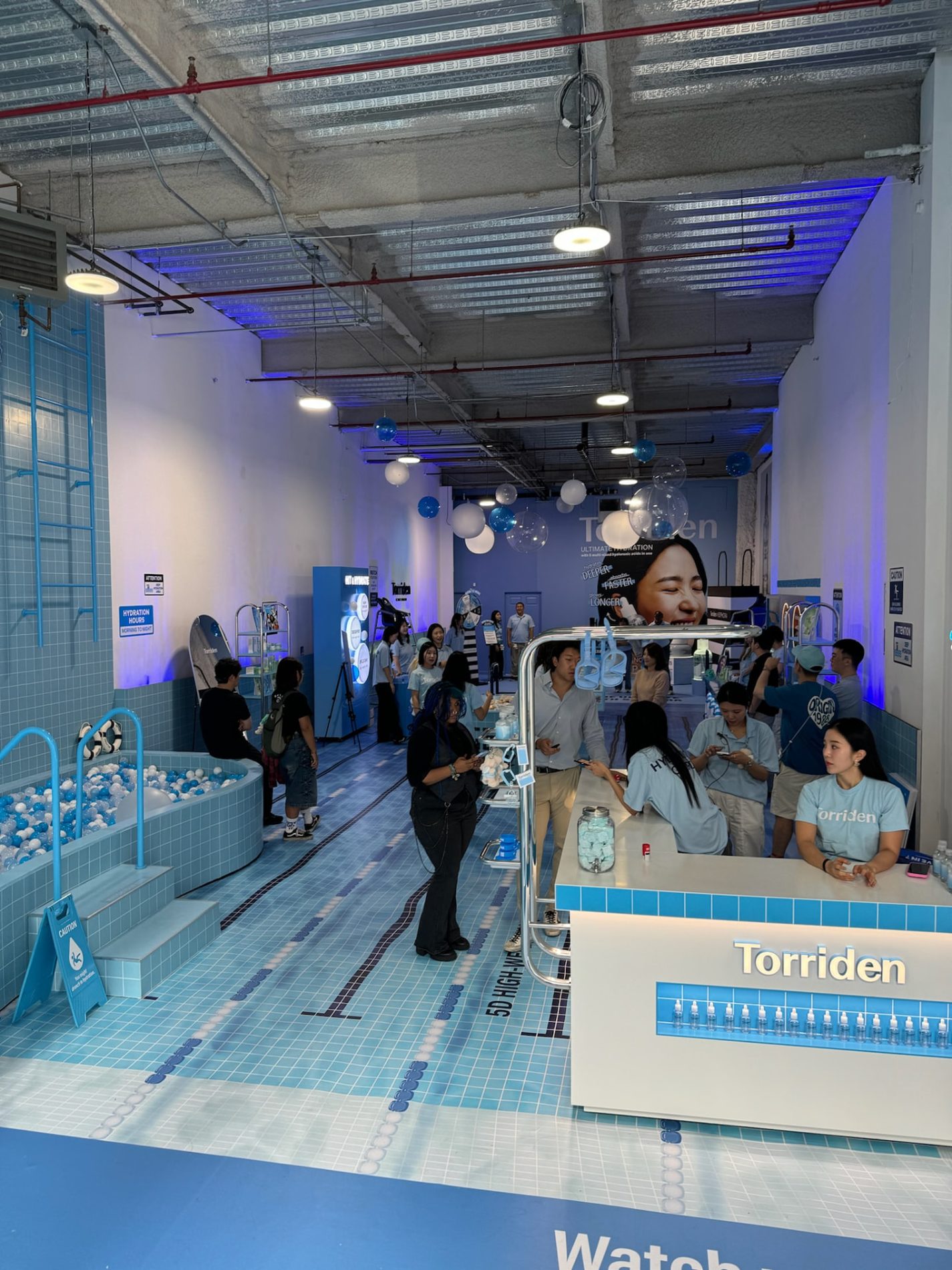
- Phase 5, at launch: experiential. A pop-up or launch event turns a shelf placement into a story creators cover, compressing awareness at the moment distribution goes live.
Retail buyers do not want to be your first US marketing. They want to be your distribution once demand exists.
Why the creator layer is not optional
K-beauty's American growth has not been bought with advertising. It runs on a discovery loop: a shopper meets a product inside creator content, then buys without leaving the feed. That loop rewards consistency and volume of creator content far more than it rewards a small number of polished brand films.
The evidence is in the social commerce numbers. US beauty gross merchandise value on TikTok Shop reached $980 million in the second quarter of 2026, up 82 percent year over year, and seven of the top ten skincare brands on the platform were Korean. Medicube led with $62.8 million in the quarter and Dr.Melaxin followed at $38.8 million. Those are not legacy conglomerate brands with US advertising budgets. They are brands that put content in front of American shoppers at volume.
What the shelf looks like now
Distribution has widened considerably. Korean brands are no longer confined to specialty Asian beauty retailers and cross-border marketplaces; they now reach US shoppers through Sephora, Ulta Beauty, Amazon, and Olive Young's own US entry. That is an opportunity and a problem at once. Getting in is more achievable than it was five years ago. Standing out once you are in is considerably harder, because the shelf next to you is also Korean.
| 진행 방식 | Where budget goes first | Typical failure mode |
|---|---|---|
| Retail-first | Trade terms, in-store, packaging | No US demand at launch, weak sell-through, reduced reorder |
| Creator-first | Seeding, then paid creator, then retail | Slower to shelf, but arrives with proof and search volume |
The operational reality nobody budgets for
The parts of a US launch that consume the most time are rarely the creative ones. They are logistics and compliance: US-compliant labelling and ingredient review, a domestic fulfilment path so seeding does not ship internationally one box at a time, W-9s and payment rails for hundreds of American creators, contracts with usage terms that hold up under US law, and someone in a compatible time zone able to approve content same-day.
A brand running this from Seoul with a two-person global team will spend most of its first year on administration rather than marketing. That is the single most common reason a well-funded launch underdelivers.
We run US market entry for Korean beauty brands end to end, from seeding through retail launch activation.
Timeline expectations
A realistic US entry runs nine to twelve months from first seeding to a retail launch with support behind it. Brands that compress this to three months almost always do so by skipping phase 1, which is precisely the phase that makes everything after it cheaper. Seeding is the least expensive way to learn which of your products actually demos well to an American audience, and that lesson is worth more than the media budget it saves.
자주 묻는 질문
- How much does a US market entry campaign cost for a Korean beauty brand?
- It varies by scope and ambition, but the meaningful split is between seeding programs, which are driven by product cost and fulfilment, and paid creator campaigns, which are driven by negotiated creator rates. We publish our contracted creator rate benchmarks openly so brands can budget against real numbers rather than rate cards.
- Should we launch on TikTok Shop or Amazon first?
- TikTok Shop is where discovery happens for K-beauty specifically, and it converts inside the same feed where the content lives. Amazon is where demand you have already created gets captured. Most brands benefit from establishing content velocity first, then making sure the Amazon listing is ready to absorb the search volume that follows.
- Do we need a US entity to run influencer campaigns in America?
- Not strictly, but you need a US payment path for creators, correct tax documentation, and contracts written to US standards. Many brands run this through an agency of record in the US rather than establishing an entity in year one.
- How long before a US launch should seeding start?
- Three to six months ahead of retail availability. Seeding into a market where the product cannot yet be bought wastes the content, and seeding after launch means the shelf is live before anyone is looking for it.
- Is K-beauty still growing in the US or is it peaking?
- Growing. US K-beauty sales reached $2.8 billion, up 48 percent, and Korean exports to the US rose 15 percent in 2025 to become Korea's largest market. Household penetration at 28.7 percent means roughly seven in ten American households have not yet bought the category.
Sources
- 1.Korea Herald — K-beauty exports cross $11b milestone in 2025 (Ministry of Food and Drug Safety data)
- 2.BeautyMatter — South Korea Climbs to Second Place in Global Beauty Exports
- 3.Tubefilter — Beauty sales neared $1 billion on TikTok Shop last quarter
- 4.WWD — TikTok Shop Drives $2 Billion Beauty Boom (Circana report)
- 5.Personal Care Insights — South Korea sets cosmetic export record